The Sound Through the Wall That Changed a Courtroom

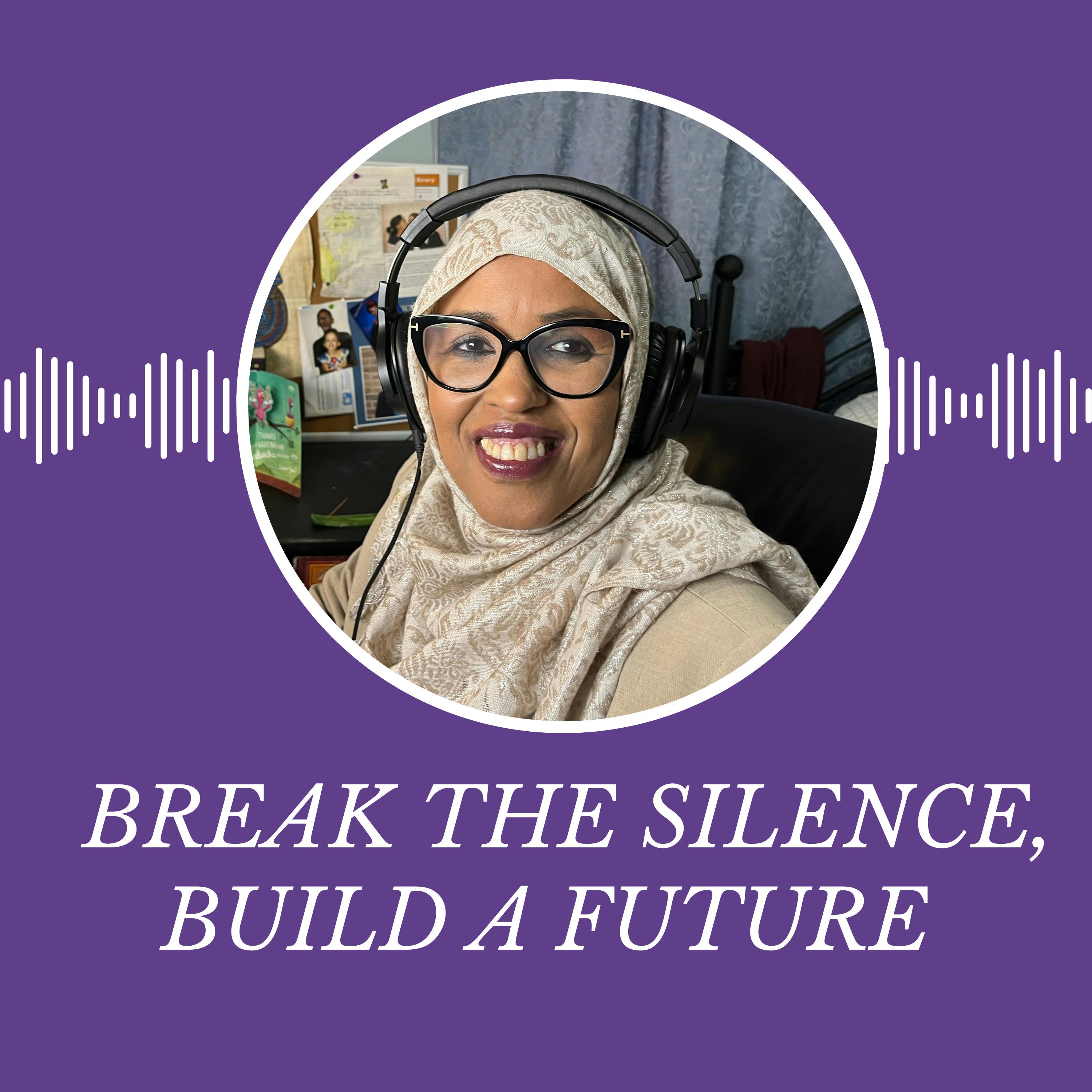


A stranger’s decision to speak up from a motel room in Windsor may be the difference between silence and survival. In this episode, host Fartumo Kusow examines what happens when a sound through the wall feels wrong—and whether hesitation can become a moral turning point.A married couple from the UK checks into room 22 of the Best Way Motel, directly below room 27, where Zahra is staying. In the middle of the night, the wife hears banging and a soft plea: “Stop it, you’re hurting me.” What follows is an hour of uncertainty, a walk to the front desk, and testimony that later becomes part of a Canadian trial.You’ll hear how two ordinary witnesses became central to the case, why their memories did not match perfectly, and how the motel manager’s response shaped what happened next. This episode explores the fragile space between hearing and acting, and the quiet courage it takes to trust your own alarm.If you’ve ever wondered when to speak up, call for help, or trust that uneasy feeling that something is not right, this episode will stay with you.
Fartumo Kusow: Welcome to Break the Silence Build the Future. I'm your host, Fortuma Cuso. This is episode four of eight minutes to silence. If you have been with us since the season opener, you know how this works. Ten of our twenty episodes for the season follow the trial roughly in order and this is the third of those ten episodes. Today I want to take you to a specific room, a motel room, room twenty two. of best way motel here in Windsor, not the room my daughter Zahra was staying that night. That was room twenty seven directly above room twenty two. This room, room twenty two belonged for a few nights at least to a married couple visiting from the United Kingdom. They had never been to Windsor before. They picked this motel for no more complicated a reason. Then perhaps the convenience. It was maybe near the places they wanted to see. It was perhaps reasonably priced, and it definitely had a room available. So they took it. They had never met my daughter. They never met the man responsible for her death. They had no connection to Windsor, no connection to our community, and by every reasonable measure, no reason to ever think about that motel again. Once their vacation ended. Yet two years later, in the middle of their own night, because of the time difference between United Kingdom and Windsor, Ontario, they sat in front of a laptop camera and told a Canadian courtroom what they remembered hearing through a wall. That's who today's episode is about, not the trial's most difficult. Dramatic witnesses, not experts, two ordinary people on vacation, who happened to be in the wrong room at the wrong time, and who had to decide in the moment and then again two years later, what they owe to a stranger they never met. I think that's a question most of us will face at some point in our lives, in some form. Not a courtroom. just a moment a sound through a wall, a raised voice next door, an argument is spilling out of an apartment down the hall. A moment where you have to decide It's this mind to act on. So today isn't really story about villains and victims, at least not directly. It's a story about the space between What we do and what we don't when we are the only ones who heard something. Let's go back to that night. Our two witnesses, I'll just call them wife and her husband, since I won't be using their names in this show, had come to Windsor as a part of short trip to Ontario, the Sea and Tower, the Niagara Falls, a few relaxed days in a city they'd never visited before. Ordinary tourists doing ordinary touristy things. They checked into The best way motel days before anything happened. Room twenty two ground level of two story section directly beneath room twenty seven. In the early hours of the morning into what would have been Saturday, may twenty seventh, twenty twenty three. The wife told the court she heard the sound coming from direct directly above her, a rhythmic banging, and underneath it a layered with it a voice. Not shouting, not screaming, a soft voice she called it. She was very specific about this on the stand, saying stop it, you're hurting me, stop it. Over and over she said, for as long as the banging continued. She testified that this went on for close to an hour before she decided to do anything about it. I want to sit with that hour because I think it's the most honest part of this whole story. When the defense asked her essentially why did you wait so long? Her answer was not an excuse. It was the truth of how most of us actually process an unfamiliar sound in the night. She said she was listening, trying to decide whether this was something that needed her involvement or something that was none of her business. An argument that two people would work out on their own the way people sometimes do. That hesitation is not a flaw in her character. It is, I think, a The most universal part of this entire episode. Almost everyone listening right now has had a version of that hour lying awake deciding whether a sound is yours to act on or not. Eventually she got up. The security footage from that night shows her stepping out of room twenty two in the courtyard area of the motel. And looking straight up directly at room twenty seven before she continued on toward what we later found out was the front office of the motel. She didn't seem sure yet what she was going to say, at least by looking at the way she moved, turning back and looking up at room twenty seven couple times. But something in her had crossed from uncertain to To ascertain enough to act. She told the motel's owner who's also a manager in plain words there is a woman up there being hurt. Please go and help her. I want you to imagine saying that sentence to a stranger at one in the morning or close to one in the morning in an unfamiliar country. About a woman whose face you have never seen. That's not a small thing to say out loud, and she did it. The manager went upstairs about three minutes later. The footage shows him standing outside room twenty seven for about four minutes, knocking, stepping to the window, coming back to the door, putting his ear against door, listening. Eventually four minutes later the door opened and there was a brief animated exchange between the men who opened the door and the manager. We don't know what they said to each other because there is no audio in the footage we're watching. Was there a cursing, angry words, raising foice? We don't know that. The manager when he later took the stand Described that same exchange as friendly. Two witnesses, two words friendly, the manager said, and angry the couple called it for the exact same situation in another person's life. I'm not going to tell you which one is right. The trial spent a long time on exactly that question and its answer to. To it and we will come back to it later. What matters for today's part of the story is what happened after that door closed. The noise our witness said stopped. She and her husband went back to their own night, believing because it was the only reasonable thing left for them to believe that whatever had been happening. Someone in a position of responsibility, the manager in this case, had gone up and dealt with it. They did their part by reporting it to the manager. They didn't call the police themselves. They didn't check on the room the next morning. They finished out their stay, flew home to UK, and by every account they didn't learn what had actually happened until later. When a Windsor police officer called them out of nowhere, asking what they remembered about the night at the motel, that if the phone hadn't rung, they might have let it slip out of memory entirely. Let's talk about what it took to bring them back because our witnesses they lived in the UK. In the trial, they testified by a video link and the judge would not let that happen casually. There is a rule in trials a witness cannot hear another witness's testimon testimony before giving their own. Normally that's easy to manage in a courtroom. When you have your witnesses coming in in person, but it's much harder to manage across an ocean with two different people who happen to be married to each other and live in the same house. So the judge had the wife carry her own laptop, camera on, showing the court that in the room she was alone. No one else could hear. Or influence her or be influenced by what she was about to say. Her husband, meanwhile, had to be elsewhere in the house entirely while she testified, out of earshot, so that nothing she said could reach him before his own turn to testify came. Said this took the better part of a day, before either of them said a single word of Actual testimony. Here's what is struck me most. Reading through this, neither of these two people had anything to gain from coming back. They weren't Canadian citizens. A Canadian court has a real power to compel its own citizens to testify. I know that first hand, because as a Canadian, if I'm subpoenaed, I don't get to say no. But our two witnesses weren't subject to that. They could have simply not answered the phone. They could have said this isn't our country, this isn't our case, we don't want to be part of it. We let the manager know we did what we needed to do at the time, and we don't need to be involved. They didn't know my daughter. They didn't know the man on trial until that phone call after the vacation ended. They didn't even know anyone was hurt, let alone had died. And still they came back twice over the phone and a video first for an earlier hearing to decide the level of charge this man faced, and then again for the trial itself to sit in front of a camera in the middle of their own night. And describe under oath on a Bible one difficult hour they would probably have preferred to forget. That to me is its own kind of courage, not the dramatic kind, the quiet, inconvenient kind, the kind that doesn't ask for anything in return. Under cross examination, the defense lawyer pressed them hard. Why didn't they call nine one one themselves? Why not use the phone in their own room rather than walking down to a stranger at the front desk? Why put your trust in someone whose job as a defense budget was bringing towers and changing sheets rather than an actual authorities? The wife's answer never wavered. There are many ways to ask for help, she said. And that was the way she chose. She told the person she believed was responsible for that billing exactly what she'd heard. She didn't waver on that under repeated questioning. Her husband testified later separately, describing the same night in his own words. And here is something the defense tried to use against them. And something I think tells you the opposite of what they intended. His account and hers were not identical. He remembered it as louder, more violent sounding. What he described as a man beating a woman and a woman crying out in real pain. She remembered it as a quieter, a near constant, soft voice repeating those same words for all. almost an hour. The defense suggested this meant they'd coordinated their stories. I would argue it means the opposite. If two people had gotten together and rehearsed a story, you'd expected it to line up cleanly. What you got instead were two honest memories of a hard night that to me reads less like collusion and more like two people telling the truth. The motel owner, manager, and his wife also testified. And I want to spend a few minutes on them here, even though we'll go much deeper on this specific night in next week's episode. The manager's wife spoke mostly about the check in earlier that evening, small procedural detail about online booking. That becomes important later in the trial. What matters for today is what her husband did after our UK witnesses came to him in the middle of the night. He confirmed, on the stand, that he had a master key to every room in the building, including room twenty-seven. He confirmed that he went upstairs, he stood outside that door for several minutes, knocked and Listened at the door, checked the window, he confirmed that in all that time he heard nothing through the door that alarmed him. The defense pressed him hard on this, suggesting repeatedly that he in fact opened that door with his master key, that he had seen inside, that he had even spoken directly to the woman inside and out. Asked if she was alright, he held the same answer through all of it. He did not open the door, he did not see a bed, he did not see a woman and he said plainly he could not have asked the question of someone he never saw and never spoke to. I'm not going to render a verdict on those four minutes today. That belongs to next week's episode, where we will walk through them for more questions. Closely 'cause they matter enormously to how this trial unfolded. What I want to sit with today is simpler. A man walked up flight of stairs because of a stranger told him a woman needed help and several minutes later he walked back down. I keep returning to that hour. Our first witness is spent lying awake, trying to decide if the sound through a wall was hers to act on. I don't think she did anything wrong, if anything. She did more than most people ever do in that position. She got up, she looked, she found the person in a position of responsibility and told him in plain words what she believed was happening. That's more than nothing. For a lot of people in a lot of situations, it would have been everything they were capable of doing. But I keep asking myself what might have been different if she, if any of us trusted our own alarm the moment it went off? If a soft voice repeating stop it, you're hurting me, stop it registered as urgently as a scream. If picking up the phone and calling for help felt like the obvious first move instead of the very last option considered after everything else had been tried. This is at its core exactly why the Zahrabula Foundation exists. Not to stand in judgment of the people in that motel that night. None of us know what we would have done in that exact position at one in the morning. In an unfamiliar country, but so that the next person standing where our witness is stood doesn't have to spend an hour deciding whether what they are hearing counts as serious enough. Here's what I want you to take from today, if nothing else. Trust the discomfort. If a sound unsettles you enough to lie awake thinking about it. That an ease is information, not an inconvenience to talk yourself out of. Call it in. You don't need to be certain. You don't need proof. You only need to be willing to be wrong in the direction of someone's safety. Next week we go back to that same hallway and we slow it all the way down minute by minute through the four minutes our second witness, the motel manager, is spent standing outside that door, what he heard, what he didn't, and what a courtroom eventually made of those four minutes. You can find more about Zahraboule Foundation's work at Zahraboule Foundation dot CA. Listen to the show at Zahraboule Foundation is like podcast or wherever you get your podcast. Please subscribe, share and like the show. And if today's episode moved you, consider joining the Circle of Giving campaign before august fourteenth. What would have been Zahra's fortieth? birthday. That has been episode four of Break the Silence Build Build the Future Eight Minutes to Silence. Until next time, bye for now.


