Strategic Silence and the Most Dangerous Moment


Content note: This episode discusses domestic and gender-based violence. Listener discretion advised.
Leaving an abusive relationship isn't a single decision — it's a series of calculated, survival-driven choices. In this episode of Eight Minutes to Silence, host Fartumo Kusow sits down with Sofi Khan to unpack what researchers and advocates call "strategic silence" — the deliberate quiet survivors adopt not out of fear alone, but as a conscious safety strategy during the most dangerous moment of an abusive relationship: the moment of leaving.
Together, they explore why silence is so often misread as compliance, what "the most dangerous moment" actually means for survivors and the people trying to help them, and what a real roadmap toward safety can look like.
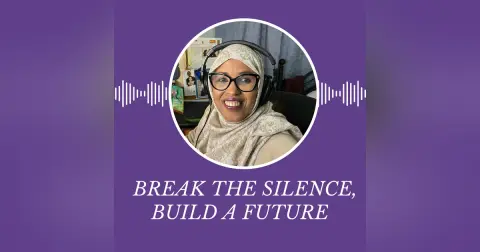
Eight Minutes to Silence is Season 3 of Break the Silence, Build a Future, a production of the Sahra Bulle Foundation — a Windsor, Ontario registered not-for-profit corporation working to end gender-based violence through education, storytelling, and community action. Founded in memory of Sahra Bulle, the Foundation turns grief into a living force for change through workshops, an annual conference, community walks, and public-awareness campaigns.
🔗 Full episode notes, transcripts, and ways to support:
https://www.sahrabullefoundation.ca/podcast
💜 Join our Circle of Giving campaign before August 14: https://www.sahrabullefoundation.ca/giving
📍 #IAmSahraBulle Conference — November 26, 2026, Windsor, ON — free to attend
Turning silence into collective power.
#SahraBulleFoundation
#IAmSahraBulle
#EightMinutesToSilence
#BreakTheSilenceBuildAFuture#EndGBV
#GenderBasedViolence
#SilenceIsNotProtection
#ActNotJustRemember
#DomesticViolenceAwareness#DVAwareness
#SurvivorStories
#IPVAwareness
#PodcastRecommendations
#WomensSafety
#TraumaInformed#Windsor
#WindsorOntario
#WindsorEssex
speaker-0: Welcome to Break the Silence, Build the Future. I'm your host, Fortuma Kuso. Today's episode I had the privilege of being joined by Sophia Khan, who speaks about intimate partner violence both on a professional level and a personal level as a survivor of violence herself. So I will start by asking Sophia Khan to introduce herself.
speaker-1: Hi everybody, yes, it's Sophie Khan. I'm a lawyer, I'm an activist, and I'm also a writer. I invented an eight-step guide to help survivors leave abusive relationships strategically. And this was through my own personal lived experience of domestic abuse because I got tired of waiting for policy to change. And so I decided to share my experiences to help drive that change at a very grassroots level to seek to empower and educate those who potentially don't have access. to tools, resources, and that was one of the main motivators for me to ensure that nobody else went through what I went through and what so many others in the world have gone through.
speaker-0: Thank you so much and and I'm so grateful that you were able to join me. In today's episode, we are going to center it around the sentence we all say, and often with the best of intentions, we say it to friends, we say it to sisters, we say to co-workers, classmates. And the woman at the â school â kiss and right drop of â location whose smile doesn't quite reach her eyes. We say, Why don't you just leave? I want us to sit with that sentence for a minute today, because here's what the research tells us and what my guest Sophia Khan has lived herself through and writes about leaving is not the safe ending we imagine it to be. Leaving is the most dangerous moment in an abusive relationship. The moment a woman tries to go is often the moment the danger is its highest. Because this abuser who thrived in controlling this person now realize they're losing tonal control of them. So just leave while it feels supportive sentence is not the answer we think it is. So the question is, what is the answer if just leave is not the answer? That's what we are here to talk about today. My guest today is someone whose work stopped me in my tracks. Sophia Khan, as she mentioned, is a lawyer, feminist, and activist, and also a shadow board member of Domestic Abuse Charity in the UK. She's also a survivor of domestic abuse herself. And out of what she had lived, out of her terrible experience that no woman should go through and nobody should go through, she'd built something she'd hoped existed when she was going through it and hopes still it's going to be a guidance for other women, other individuals experiencing intimate partner violence. The guide is called GoGo, which stands for getting ahead whilst getting out. It's an eight step framework. That helps women leave abusive relationships safely. Deliberately, that word deliberately is quite important. She wrote it in her own words because nobody gave her a roadmap of what it looks like, whether you are in a abusive relationship or not. And the roadmap she needed. So she made her own. And I came to know Sophie. Through her proposal for I am Zahrabula conference 2026, November 26th. And I knew her voice belonged in this show. Before we begin, if you're listening this right now and you are in an immediate danger, this episode is not the thing you need in this very minute. Please call 911, contact your local shelters, the police agencies, law enforcement. So you are safe. Everything Sophie and I talk about today is for the planning, not for the emergency. And Sophie's very own work is clear about that too. So today we're going to talk about three parts. First, what is abuse? What does it really look like? And why just leave so often? Tells the woman we say it too. Second, And the heart of our discussion today would be this concept of strategic silence and what it really means to plan your way out safely. And the third one we're going to discuss is the danger that doesn't end when a woman walks out the door and when hope and healing come in. So thank you, Sophie, for being here and welcome to Break the Silence Build the Future. You've written a roadmap, steps, a guide that no one handed you when you needed one. So you appeal to your own. Take me back. Was there a moment, a day, an event, an incident when you realized that what you needed wasn't a more courage? Because recognizing where you were in was the biggest courage, but you needed a strategy.
speaker-1: Yeah. So I, from, in terms of how I discovered that I was in an abusive relationship, it was completely by accident. I found out that my partner at the time was cheating on me. And after that, I decided to understand what my rights and my protections were with the lawyer. And in the process, when I understood how our relationship was, how it was difficult for me to not be able to have a direct conversation with him because I couldn't trust his reactions and how he would react to how I'd be feeling. It's when I realized there was a pattern of power and control within the relationship. So what I did was I provided evidence to my lawyer and I said, in your opinion. Is this domestic abuse? I need an objective opinion." And he said, yes. And it's only then that I realized that I was in an abusive relationship. But it's funny when you're actually in an abusive relationship, it's like navigating your life on the road ahead while you're in a fog. And I felt that fogginess definitely during that relationship. And I think it's for that reason, it was very difficult for me to decipher as to whether I was in an abusive relationship. But yes, it was completely by accident that I in fact discovered. that I wasn't in an abusive relationship.
speaker-0: That's that's a very interesting. And for anyone hearing the word go-go for the first time, your framework is eight steps from removing those roasted tinted glasses all the way through the healing. Can you give us the shape of it? Because I think one of the most important things you do is show people that leaving isn't. A single brave act that we do and we say, okay, I had enough. This happened to me, that happened to me, that happened to me. I'm gonna back my backs and I'm out. And once I'm out, I'm going to be happy. It doesn't in real life quite work like that. So could you walk us through the shape of your framework?
speaker-1: Absolutely. So Gorgor, if I could sum it up, it provides a bridge between awareness and action. Awareness is being aware of what domestic abuse is, what the definitions are, and understanding how that applies to you and your experience of abuse. The action part is the tangible aspect of actually leaving that abusive relationship. And I'm very clear on that because Gorgor only makes sense provided there is a goal at the end of it. And the goal is to leave your abuser. And so what it does from start to finish is guide the reader through that process and also bakes in healing as part of that framework as well, which I think is really important because what domestic abuse does is it creates trauma within the body. And I want it to be responsible. And I wanted to make sure that I factored in that experience as well. So briefly chatting through what steps one to eight is, one is remove the rose tinted glasses. And that is basically coming to terms with domestic abuse. I provide recognized definitions of domestic abuse, guiding the reader through those definitions in an emotionally intelligent way, urging readers to use the power of their intuition and experience and apply it to those objective definitions. So it's the objective definitions combined with the subjective experiences of survivors that is the golden ticket that I refer to in step one. Step two is strategic silence. And we can talk a little bit about it in more detail, but essentially what that is, it doesn't mean to literally remain silent. means not tipping off your abuser and not letting your abuser know that you're aware that they're being abusive to you and that there is domestic abuse present. But what it does involve is you reaching out to domestic abuse agencies and having a trusted circle of people that will essentially align with your efforts of you leaving the abusive relationship safely, provided you're able to do so safely. And I include a lot of safety mechanisms within Gorggo. because I'm mindful of the fact that abusers are becoming a lot more sophisticated. They are tracking, monitoring, bugging. There's so many different ways in which they monitor the survivors' behaviors and devices. So I make sure that I include a lot of safety caveats in that. Steps three and four essentially is making a list, doing your due diligence. That is the part where I encourage survivors to be curious, providing again that they can do so safely. engaging legal advisors and taking steps to documenting domestic abuse, again, provided they're able to do so safely. Step five is actually getting out. And this is where I really highlight the risks that are present. I take a very intersectional approach. So when I talk about risks and safety planning, I include LGBT plus survivors within that. include those who are multiply disadvantaged and have complex needs. within that includes those who are disabled as well. those potentially have substance abuse issues, those who are at risk of homelessness, et cetera. So I try and be as comprehensive as I can, while at the same time not presenting a universal approach, because I'm mindful that each survivor has their own unique experience. And I don't want to dictate what the right thing is to do. What I can do, however, is present a range of tools and resources, a range of questions that will help them to start to think about the risks that are present within their own lives in that abusive relationship. and then create a safety plan to mitigate those risks. So step five, that's really the risk assessment and creating a safety plan. Step six is staying vigilant. And this is the post-separation abuse risk that I talk about, that upon leaving an abusive relationship, that's where the risk of abuse is very high. In addition to obviously when a survivor actually leaves the abusive relationship, this is where the risks really peak because what's happening is you're telling your abuser that they no longer have control over you. And that's where those risks really spike. So I'm very mindful of that between steps five and six. So staying vigilant also remains very much about warning survivors about the risks that are prevalent and how they can keep safe on an ongoing basis. Step seven and eight is really the recovery and recuperating part of the journey. Step seven is about the ways in which survivors can help piece together their lives in order to recover from domestic abuse, thinking about their career, their employment. their housing instability, if that was created, any financial instability, how they maintain relationships and friendships going forward, that sort of a thing. it's meant to help survivors feel less alone in their struggles and in the confusion when then while they're still potentially trying to navigate the struggles of leaving an abusive relationship. Step eight is the healing part of Gogo. And that's the final step. And what that is, is that it proposes different healing. therapeutic modalities such as EMDR, CVT, and it encourages survivors to think about what will help them on their healing journey, whether it's through therapy or counseling or any other types of support. And it's meant to really bake in this whole trauma-informed approach of me making sure I'm addressing therapeutic support, yes, consistently throughout the process. But step eight is where the real groundwork is done in terms of survivors trying to really recover. from their trauma provider, they're able to do so and it's safe for them to be able to do so. So that's the eight step guide.
speaker-0: â thank you so much. I especially like you paying careful attention to to the intersectionality of some of us that are experiencing that kind of trauma. And even the services that are out there might not be set for them. But right now I wanna come back to where we started. Women who are killed by a partner are killed after they separate, including my own daughter. Or while they're trying to get out. So help us understand why that window is so dangerous and why the idea of strategic silence is there to protect women.
speaker-1: Absolutely. I think the first stage is understanding the escalation pattern and how abusers operate. So if we think about how abusers operate, they operate from a perspective of control. And so when the survivor tells their abuser, you no longer have control over me, they will do whatever it takes to gain that control back. I can give you an example. On the day I told my abuser I was leaving him, he â grabbed me by the shoulders and tried to drag me back into the house. Now I had safety mechanisms employed on the day. had family members standing outside my home. I had my best friend in the parking lot waiting there in a car. I had called the police the day before. I had a court order that I had sitting on ice. I had engaged my lawyer. I had spoken to my employer about it. So I had taken all these very strategic steps. So I told as many people as I could just prior to the event. to ensure that they were aware that there was going to be this heightened risk. And I put in safety mechanisms in a way that was legal because I engaged lawyer and I made sure that was all in place. And I made sure that my position was the best possible position that I could be in a very difficult situation. Again, I appreciate that everybody has their own circumstances, but for me, that was when I came to terms with the fact that, this really got bad. And it was on the day that I told my views, I was leaving him. So that gives you an example of how escalation pattern works. Now, in terms of the real statistics, I believe that in the UK, 43 % of women are killed by partners when they're to separate or having to separate, which is actually likely to be an undercount. So that's a very high statistic. And I think when we tell survivors to just leave, the difficulty with that is, I don't even want to say twofold, it's threefold, multiple fold, but I think I'll cover a couple of the points as to why it's difficult. think the first is because domestic abuse happens within the context of an intimate relationship. And that intimate relationship creates something that I refer to in my book as trauma bonding. And with that trauma bonding, it becomes very difficult for those who are experiencing domestic abuse to just leave. And the other points that I talk about that make it also difficult. for survivors to leave us is something we call patriarchy and how patriarchal attitudes are fueled by official systems such as court processes, legal and judicial systems, through the police behavior in terms of when survivors actually report domestic abuse and how that is dealt with at that level. There are so many barriers, systemic barriers that are present when survivors try and address domestic abuse, sort of at the stage of awareness right through to reporting. And the statistics even become more challenging as to the point of survivors actually going away, reporting the abuse and when those reports actually land a conviction. So there are a lot of barriers in place when it comes to when we tell survivors to just leave it isn't that easy. It's not as simple.
speaker-0: Yeah, thank you so much. And that â question I asked because it's really not an abstract to me. My daughter Zara was afraid and she also had â this trauma bonding where she did not wanna get him in trouble. She was afraid enough that that for her to find the balance was to be in a battered woman's shelter because this person knew where we lived and she was terrified he would find her. That was the bravest thing she had done after leaving eleven times. She tried to get out safely without causing him any legal challenges. But the danger was still there, in fact heightened. And we don't know what got her into deciding to see him one last time and tell him in person. And that's what cost her life. So when we talk about most dangerous moment, about the planning woman needs around it. I understand it very well because my daughter went through that and it cost her her life in that mindset of saying, I just wanna tell him one last time and not having that safety mechanism built around even in the telling process. And that's one thing I like about your guide is that it reminds people that you need a stronger mechanism. Even in getting your personal items and getting out of that house, whether it means that you get a police escort or you get a family escort or you go in at a time when your partner is not in the premises and you know you can get in safely. So I want us to make this practical because someone is listening right now who just recognized herself in this conversation and saying. Yeah, this sounds like me. I am in that situation. In those first days when she's only beginning to think I really need a way out. This cannot continue. What does the strategic silence look like? Can you walk us through what you call pause plan proceed? And tell us when what you mean by building a trusted circle.
speaker-1: Apart from my own lived experience in terms of how I employed strategic silence, when I actually did my research, I drew on Mikhail Foucault's concept of how conversation can lead to control of power and through conversation, people are able to exert power and control. So for example, if you are in an abusive relationship and you share it with somebody who is not trauma informed, is not someone who aligns with the objective of helping you leave an abusive relationship. That conversation you have with that person may dissuade you from leaving an abusive relationship. So I spoke in my book about how conversations can shape one's narrative. And these unhelpful conversations can in fact prevent those who are in abusive relationships, not just from identifying domestic abuse, but from leaving abusive relationships. So when I spoke about strategic silence, I referred to the overall concept of how conversation can really shape your narrative and that internal dialogue within yourself. And when you are being strategically silent, you are basically speaking to those who will align with your objective of leaving an abusive relationship, those being domestic abuse agencies specifically, because they're trained to deal with situations like this. They have access to third party agencies. They can give you the best advice because that's their sector. The next is the trusted circle that I refer to. And I recommend in Gorgel that the reader picks no more than five person from their circle. Those people are not connected with the abuser. There's no risk of them tipping your abuser off. If you are part of a close knit community, be mindful of those influences as well. And if you are speaking to somebody who's within that community, make sure that they are people who will align with your objective of living in abusive relationships. So that's the whole concept of strategic silence. Pause plan proceed is actually a framework that I included within GoGo, which is a checkpoint system, almost like a traffic light system. So before each step, pause plan proceed, there's a checkpoint system that's included before the beginning of each chapter. And what it does is it encourages those readers to pause, think about their circumstances as they're evolving. How has their abuse's conduct changed? Has it escalated? Is there a real risk to their immediate safety and security? If so, Call 911, call 999, call 112, whatever the emergency services line is in your country, do just that. But if you can proceed safely, think about the different themes that are ongoing based on your individual circumstances. So think about your mental health, think about domestic abuse services and how they might be able to help you in that specific step. Think about your digital safety and online presence. Are there ways that your abuser can continue to surveil you and assess your plans? Are you being safe in terms of how you're communicating your plans to other people? And there's another really important checkpoint within the POS Plan Proceed â framework, which is barriers that are specific to those who are LGBT +, people of color, migrant survivors, those with complex needs and who are multiply disadvantaged because there are specific risks. that are applicable to those categories of people that may not apply to others. And that's why I really, really encourage them to engage specialist support if they fall within that category in relation to that specific step. And then proceed, which is the third part of the post-plan proceed, is proceed only once you have considered those two steps. So it really encourages readers to think about their safety consistently throughout Gorgor. And I really want it to be responsible. And that's why I designed this checkpoint system.
speaker-0: Thank you. â I want to stay a little bit longer with the idea of strategic silence. So now a show called Break the Silence, that phrase could sound contradictory. â some people, when they hear silence, they might think a woman is staying quiet about her abuse, is staying small, being passive. But you mean, as I hear from your explanation, something Completely different different. And in strategic silence, you call it it's not it's an act of resistance, not a weakness of making yourself small. Can you explain that that that contradictory, that paradox?
speaker-1: Absolutely. I kind of like the paradox because silence almost is what abusers want â survivors to be. They want survivors to be silent because they want control. They want that essential feeling of power and overpowering somebody. And strategic silence is basically having almost like a poker face and showing that, yes, on the outside, I may seem silent. I may seem like I'm behaving the same, but in the back. I'm actually going about getting my ducks in a row, understanding my rights and protections, engaging people to help me leave you. And there's something that's so empowering about that. That really is because on the end, when you do leave your abuser, it's that moment of, know what? I acted in my best interests. I fought for my life. And I did it all the while when you thought I was being silent, which is exactly what you wanted. And there's something so empowering about that, that I wanted to teach to every single survivor in the world, that you can do it, it is possible. I did it. There are so many others who have also done it. There is that aspect of contradiction that I quite like, but it also draws on the insecurities and the fears of the abuser, because that's exactly what they are. They're insecure, they're cowards, and they are fear mongers. And I really wanted to show survivors that there's a way of getting around that by empowering and educating yourself.
speaker-0: Excellent. Thank you. That's beautiful. So I want to see if I understand it so no one else mishears that strategic silence doesn't mean you are doing it alone. It means working alongside the people and services built for this, whether that is a domestic abuse charities, specialist advisors, legal advice. So Sophie, can you speak to that? Where does silence end and support begin?
speaker-1: Absolutely. So silence actually ends at step two. Silence ends at right at the beginning, which is, understand what domestic abuse is. I've applied it to my circumstances, and this is where silence ends. So silence actually ends right at the beginning of Gogo, which is the really interesting part to all of it. You are seeking support throughout the entire process. You are engaging a domestic abuse agency, for example, when you are creating safety plans. You are engaging a legal advisor when you're doing your due diligence, when you're assessing what your financial situation is, when you are understanding what resources are available to you so that when you leave your abuser, you can go somewhere. You are potentially engaging a specialist agency, for example, if you are at risk of homelessness, you're engaging a social worker if you have a disability and you want to be able to understand those specific risks and what. the next stage looks like for you when you no longer have that relationship with your abuser who might also be your carer. So it's about carrying out almost like a risk assessment from the beginning and planning throughout as information is revealed to you. And then when you're ready, provided you're able to obviously conduct this process safely, once you leave your abuser, have everything, you have everything you need to understand that when you leave your abuser, you do it from an informed place. and you understand the escalation pattern, you understand the homicide timeline and how femicide takes place and you understand the risks. So I don't want survivors to go into this process blindly. I want them to understand the risks. So I think this is really important actually with Gorko. It doesn't present a rosy picture. It doesn't sell the image that when you go to say the police that they will believe you. If you're a black survivor, if you go to refuge, what are the statistics that you will actually get accommodation? So I want to educate survivors. Yes, you are empowering yourself with tools and resources, but I'm also empowering you with knowledge as to what the barriers are so that you can plan in a way that's realistic. Because my own personal journey, it wasn't prepared for some of the barriers I encountered. Some of the things that I heard, the lack of trauma informed approaches by official processes when the police called me and said they couldn't charge my abuser because there were no witnesses present. That level of disbelief, you know, I want survivors to go into this being ready for that. And then once they understand it, they can then work around it based on their own circumstances.
speaker-0: So speaking from personal experience, I remember my daughter was caught in this â terrible place where she knew she was in this abusive relationship, but she did not want to go to law enforcement and because the couple times she went nothing came out of it. Also she did not want to be responsible why another black man was arrested or in trouble. She just wanted to get out. And when she reached the other place where she was so traumatized, she couldn't think clearly. And I went with her to the doctor that she would see. We saw â primary care physician. We saw a psychiatrist. We saw a psychologist that I was actually helping her pay for the costs that were needed out of pocket. And I told them can I tell you some of the things that she might not remember because she's traumatized that I witnessed. The doctors will say no, we can't add anything to her file that she didn't tell us. Or can you let the police know? No, the only way we could let somebody know is if we get a court order to â produce our notes and so on. The same when I went to the police and said this is what she's going through. I was told what you're telling us is hearsay. And you weren't there when it happened. Of course you saw your daughter with with injury black eye, broken nose, whatever, but you weren't there. And he could say she fell off the stairs or or anything in between. So there's nothing we can do about that. But as soon as my daughter was killed, all those files became my files. When I then they were no use to me. So because To identify her remains, they needed the dental record. So I had to give them a release form so they can go to her dentist and get that. They needed, â you know, the last time she had x-rays for broken bones, so they could see what were new bones broken and the old broken bones and for the core. So all those files became so I was kind of bewildered thinking, if I had access to these files when she was here, maybe it would have done some good. But now they don't do any good. So, and we always, both her and I, felt like we were working within a system that didn't understand this as much as we didn't understand it. So, one thing that stood out to me as I follow, and by the way, our audience, the book is going to be out in a few weeks. So, your work, in my understanding, is doesn't speak to one kind of woman. It centers the women who carry extra weight. When they try to leave, women of color, women from different faiths, women who are migrant workers, or women who have left â civil wars or or generalized violence in their in their country of birth, women who are â disabled, women who are economically disadvantaged, all their resources come from the person who's abusing them. Their legal status is tied to the person they're trying to escape. In my community, I see those barriers every day. So my question to you is how do you think culture, faith, family, honor, and status change? What kind of strategic silence â and safe planning would look like for those particular women?
speaker-1: Absolutely. So I talk about, and I think this taps on more on the awareness stage, I talk about the different barriers that exist that prevent survivors from being able to identify domestic abuse. This is going really grassroots level. So when we're thinking about those who are from close knit communities where potentially there's a culture that perpetuates the idea that there's a shame around divorce or there's a shame around leaving your partner. That can potentially keep survivors locked into abusive relationship. Those who are dependent on their spouses, for example, for a spousal visa, while they're in an abusive relationship, there's something in the UK called no right to public funds. And what that means is those people who are on migrant visas, they don't have the right to seek domestic abuse services, for example, a homeless shelter, if they are on those types of visas. where do they go? So they basically risk. deportation. So that's another reason and that's another barrier as to why those types of survivors may not report domestic abuse. There are â LGBT plus survivors who may have their abusive partners risk basically saying to them, I'm going to let your entire family know that you're LGBT plus. Now, if you're from say, a very conservative background, that can also be used as a threat and can keep people in abusive relationships. So culture, community, religion, these are things that can act as a barrier for not just at the awareness stage and understanding what's happened to you to be abusive, but also to reporting domestic abuse. It's only when we understand these barriers and these risks that we can come to terms with the fact that we're in an abusive relationship. then survivors can then proceed in a way that best suits them. as I mentioned before, awareness is the first step. And so this precedes the strategic silence step. The strategic silence Step really is for those survivors who have understood that there's domestic abuse in place. They have applied those definitions to their experiences and they want to do something about it. And I think Gogo and the benefit of Gogo is that it tries to be really intersectional in that regard. It tries to get those readers who come from these very unseen communities because the law doesn't see them. So for example, if say a black survivor goes to the police and says, I'm in an abusive relationship, they're already aware of police misconduct allegations that have taken place in the UK around misogyny and racism. They're already going there with that mindset. And it doesn't help that there's a lack of police training around domestic abuse, race, gender, etc. that is certainly lacking. I think when you have those two components when they meet, there is a distrust on both sides. And I think that really needs to be worked out. need to really dedicate resource to helping survivors feel comfortable enough. to come and report domestic abuse and also to educate communities, especially close-knit communities or communities that potentially perpetuate domestic abuse, either by not listening or by actively encouraging people to remain in abusive relationships, to get them to understand that domestic abuse is a crime. It's illegal and they should not be perpetuating these attitudes because this is where crime takes place. Crime takes place in the private sphere behind closed doors, but it doesn't make it any less criminal. So that's my general feelings around â how domestic abuse affects these categories of people. And then of course, when we start going to the complex needs and multiply disadvantaged sector, it becomes a lot more difficult because then you're dealing with survivors who are potentially disabled, who are deaf, who â potentially have substance abuse issues and already are less likely to be bullied by the system if they, for example, have a criminal record. So imagine a survivor with a criminal record and a substance abuse issue going to the police. saying I'm in an abusive relationship, police will, I don't want to â necessarily guess what the reaction would be, but certainly any police officer dealing with somebody with an existing criminal record, well, there might be that aspect of disbelief, you're less likely to be believed, but it doesn't make domestic abuse any less of a crime. And so what I want to do is to really shed some light on these unseen survivors, survivors that were not thought of when these laws were drafted. survivors that were not thought of when police were potentially being trained, maybe a few years ago, 10 years ago, how many years ago, or days ago even. These are specific categories of survivors that are not especially being addressed by a lot of what's going on out there. So I really wanted to call attention to it.
speaker-0: So, an extension of that answer is in UK and and I'm sure in Canada and the rest of the world. There are support systems that exist already in place. So my question to you is: what does the support system already in place? What is it that they get wrong about these individuals with layered and and complex challenges before we even get To the idea of the abuse.
speaker-1: I think firstly, there's a huge benefit in the UK that I've seen at least on the face of it, that there are domestic abuse services that are available to those who have complexity. So for example, those who are deaf â or who are unable to hear properly, those who have disabilities, â those who come from say cultural backgrounds, there are specific almost offshoots of these domestic abuse agencies that deal with those specific issues, which is fantastic. But I think if we're talking about things that are more sort of further up the chain when we talk about risk assessments, for example, if you're dealing with an LGBT plus survivor, a lot of these risk assessments are very heteronormative, which means that they ignore things like gender identity, where you're potentially dealing with a trans woman, a trans man, or a non-binary survivor. Another thing that also isn't helpful is some of the emerging case law that I'm seeing in the UK. which makes it difficult for trans women to access refuges. So they were already very difficult to access generally for cisgender women, but now with trans women, now with the recent decisions by the UK Supreme Court, it has made it a little bit more difficult for trans women to access these services. And it also adds the polarization of these communities that are already very much a minority. So those are a few examples. And I mean, there are of course emerging cases very recently. There's a... â recent case that's come in the UK where two, sorry, believe it was three teenage boys were charged with raping two teenage girls. And in the high court, they were let off without custodial sentences and only community orders. And it was only upon being appealed to the court of appeal where they were actually given custodial sentences, but also the court of appeal commented that the earlier orders were unduly lenient. So we're seeing problems in the justice system already just taking into account, this is completely without the complex needs or multiple disadvantage. It's just thinking about how the justice system as is, is already just, there seems to be a bit of a disjoint in terms of what's happening in terms of how rape works and how sexual violence works and how it's already difficult for teenage, young teenage girls coming forward to express what happened to them and not being believed essentially by the court system.
speaker-0: It's
speaker-1: It's not it's not so much not being believed part. It's the they are believed, but there's not enough gravity that's given to their experiences. so there's there seems to be a little bit of a trading issue. There's a seems to be an education education piece that's missing. There seems to be law reform that's needed across the criminal justice system, not in just in the family, because we're seeing a lot of very recent changes made to the family laws in the UK, but not across the criminal justice system. So for example, abusers can use processes in the criminal justice system to further the abuse. And I've certainly heard that when I've been interviewing survivors, how they have really struggled with the criminal review process and the appeals process, where the abuser opens up the appeals process every couple of years, just to continue the abuse, just to further the abuse. And that creates a lot of anxiety for those who have experienced domestic abuse. there is a lot more work that needs to be done when it comes to domestic abuse and it's moving, in my opinion, way too slowly.
speaker-0: Yeah. For the last couple of months in Canada the ha the higher court have decided that if somebody suffers abuse in the hands of their partner, they can legally sue that partner for financial damages for their for their abuse. And also â it has â been added into the criminal code that Coercive control is is crime on its own. But like you said, the challenge is the laws that in the book and the community's inability to get to them and unduly slowness of â criminal justice or all the system is processes where somebody who's already been compromised in abuse, it just can be really daunting task to take costly tasks. Has to take when it comes to going through the legal processes. So that's that's really true that you can have the laws in the books, but unless the community can use that law to further its protection of its most vulnerable, then I think it's going to be a challenging situation. So â I want to start bringing us home. If a woman takes only one thing from this entire conversation today. one tool that she can hold on to tonight, what would it be?
speaker-1: I think there's if there's one tool I can think of it's the awareness piece and it's the first four pages of my book. It takes a very emotionally intelligent approach when when approaching the topic of domestic abuse, focusing on on the survivors experience. How do you feel? Do you feel like there's an anxiety whenever it comes when you see your partner or whenever you open a message from your partner or when they enter a room? Do you feel like you're being isolated? Do you feel like you're being controlled? I think that piece is really, really important. And the awareness for me is so, so very much important because unless you have awareness, you won't be able to act on it. That for me is the key takeaway.
speaker-0: Let's talk about your book. Where could people get a copy or order their copy of the book? And is there a rough idea of when they might be getting?
speaker-1: Absolutely. So you can sign up to early email updates on my social media. have a MailChimp link. So if you go there on there and sign an ad email address, you'll receive the first two chapters for free ahead of release. The book itself will be released around the end of summer of this year, but I will of course keep readers up to date provided they of course follow me on social media or sign up to early â email updates. And the book itself is in the final editing stages. Should be available sometime this year. And you can always add me on social media to stay up to date.
speaker-0: So â Sophie's â social media handles her website will be listed in the show notes. Also, you are in UK and your framework is written and based on that context, even though it's really really applicable to everybody across the globe. It's not specific to UK. So if you could point our listeners, what are the right doors if somebody is in UK with you and they wanted to â make that first contact. What would be some of the services that people can access?
speaker-1: Absolutely. So in cases of emergency, always call 999. I think I want to reiterate that. And I think that's a massive safety. Issue if you feel like your life is in immediate danger. I always say that there's a national abuse, domestic abuse helpline as well â in the UK, which is available 24 seven. There are a number of domestic abuse agencies in the UK who can also make referrals to other third party service agencies. But I would always say 999 or the domestic abuse helpline, which is available 24 seven would be the immediate and first port of call.
speaker-0: Thank you so much. And those of us that are listening here at home, let me give you ours. If you are, like Sophie said, in immediate danger and you are physically unsafe, please call 911. In Ontario, the assaulted women's helpline is free, confidential, open 77 days a week. And there are two hundred different languages, one eight, six, six, eight six, three, zero five, one one. And there is French language support for femicide. 1877 336 2488 and to find the shelter anywhere in Canada you can sh search shelter safe that is sheltersafe.ca or these will be on the show notes. Sophie, â this is a heavy work, heavy work to live through it, heavy work to talk about it, and heavy work to share it. You live so close to it every day because it's not something you are writing about or talking about intellectually only or professionally, but this is something you are at the same time processing emotionally. So I want to ask you honestly, how do you stay hopeful in the face of not only your experience but speaking to other survivors and hearing their tragic stories?
speaker-1: Yeah, I think for me, how I stay hopeful and inspired is actually the more I speak to other survivors, the more I listen to what their lived experiences of domestic abuse are, the more I feel compelled to do this work. I feel like there's space in this world for this book. I don't think anybody else is doing what I'm doing. I really want to make sure that whatever product I'm pushing out into the world is definitely survivor led, research backed. and trauma informed. And I really want to take that approach because I understand that domestic abuse was a very difficult process for me to go through. And I really wish there was something like this. I really wish there was a roadmap for me that I could have used, but I, in the end, lived my own roadmap, wrote it down and realized that I had something that could help other people. So what keeps me hopeful is the fact, yes, I am seeing people around me who are already very inspiring. I've seen amazing advocates for domestic abuse in the space, both at sort of legal policy level, at sector level. There are amazing, amazing people who are pushing this work forward. But I also do think that us as human beings, whether you're a man, woman, or if you're non-binary, however you choose to identify for human beings at a human level to really push this agenda forward, because by the end of the day, domestic abuse infringes upon your human rights and everybody deserves basic human rights.
speaker-0: Besides the go go eight step framework, is there anything else you're working on that our audience can follow on and see see in social media or your website?
speaker-1: Absolutely. So I'm a shadow board member of Solace Women's Aid in England. And they do absolutely fantastic work at policy level. I on my social media, I provide updates on my book in terms of not just the substance, but in terms of any recent legal updates that I have comments on. So do follow me on me to my way on Instagram and on tik tok. My website sets out the eight step guide. So www.sophiekahn.com It basically sets out what the eight step guide is. And also, if you would like to contact me, I also have a blog on my website as well, which is might be a very interesting read for those who are interested. Those are the very interesting things I'm working on. constantly working on things with Solace Women's Aid. We are trying to exact change at a policy level. But Gorggo and my work, it's more grassroots level.
speaker-0: Thank you. All the â links for SophieKhan dot com, me to my way will be listed in the show notes. Before you go, I'm going to ask you the question I ask everyone who sits with me in this session. It holds on two things. This show is about the cost of staying silenced and the roadmap. So many of us have never had. So what does silence cost? And if you could hand the woman one page of the roadmap, no one gave you or my daughter. Wage would it?
speaker-1: be, yeah, it would be the first page of my book, which basically talks about the different types of abusive conduct that someone could experience being in an abusive relationship. And what it does, it gets those readers to start to think about the different ways in which they may be feeling something that they can't identify or they're struggling to put a name to. They may feel like. they can't name it as domestic abuse, but I approach it in a very emotionally intelligent way where it focuses on the experiences before giving it a name. And so that's the most important page. It would be the page one of my books.
speaker-0: Sophie Khan, thank you so much for joining me today. Thank you for your work. Thank you for your honesty. And thank you for giving women a plan instead of just telling them to be brave and lead.
speaker-1: Thank you so much for your work. You're doing amazing work with Foundation and you're highlighting something that â you struggled with that was very difficult for you and your family and you're turning into something that gives a voice to others who may be feeling disempowered and not know how to break the silence. So thank you for your work too and it's been a privilege and an honour.
speaker-0: Thank you so much. That's our conversation today. You can find everything from the episode in the show notes. Sophie's book go go, her website, www.sophicon.com, and me to my way in her social handles where to follow her along the support line she had mentioned. If this episode reached you, do one thing. Send it to one person. That's how silence breaks. One conversation at a time next week. On eight minutes to silence, we go back to the story room twenty-two and the witness who came forward. Until then, keep talking, keep planning, and keep showing up. This is Break the Silence Build the Future, a production of Zahraboule Foundation. I am your host, Fartuma Cusso. See you next week. Bye for now.


